
Developmental Support
For ID Care Services clients at our day centre, in the community, and at home. At ID Care Services, our developmental support helps children, young people, and adults build the skills they need to participate, communicate, and live more independently. We design every plan around the person—their strengths, interests, culture, and goals—so progress feels meaningful and achievable.
Our Aims
Caring Support When You Need a Break
Promote Independence
In daily living, learning, travel, and self-care.
Strengthen Communication
(speech, AAC, Makaton/PECS, digital tools).
Build Confidence & Wellbeing
Through positive routines, success, and choice.
Improve Participation
At home, in education/work, and in the community.
Reduce
Barriers
linked to sensory needs, anxiety, or behaviours of concern.
Where Support Happens
Day Centre
- Structured timetable with choice boards, visual schedules, and calm spaces.
- Small-group and 1:1 sessions: communication clubs, life-skills kitchen, arts, music & movement, sensory circuits, problem-solving games, and digital skills.
- OT-informed activities for fine/gross motor development and regulation (e.g., weighted items, wobble cushions, core-strength games).
- Social learning: turn-taking, shared attention, friendship skills, and safe relationships.
In The Community
- Real-world practice: shopping, cafés, libraries, parks, leisure centres, places of worship, museums, and volunteering tasters
- Travel training: planning routes, road safety, bus/rail etiquette, ticketing, and “what if” scenarios.
- Money skills: handling cash, using a card, price comparison, and budgeting.
- Confidence building through graded exposure for noise, crowds, and queues with agreed regulation strategies.
At Home
- Routines that fit family life: morning/evening routines, homework/college prep, cooking, laundry, tidying, and safe tech use.
- Communication practice in natural contexts—requesting, commenting, choice-making, and turn-taking.
- Parent/carer coaching so strategies are consistent and progress sticks.
What We Work On
(Skill Domains)
Communication & Interaction
Speech sound practice, Makaton/PECS/AAC, social stories, conversation scripts, listening skills, and non-verbal cues.
Cognition & Learning
Attention building, memory games, sequencing, problem-solving, early literacy /numeracy.
Community & Vocational
Punctuality, teamwork, following instructions, customer interaction, and supported volunteering tasters.
Physical &
Sensory
Fine/gross motor skills, posture & positioning, sensory diets, self-regulation (breathing, heavy-work, movement breaks).
Independence & Daily Living
Dressing, hygiene, mealtime skills, kitchen safety, shopping lists, simple recipes, cleaning routines, and time management.
Emotional Wellbeing & Behaviour
Recognising feelings, coping plans, low-arousal approaches, Positive Behaviour Support (PBS), and safe boundaries.
ID CARE SERVICES
How we personalise support
Co-production
plans built with the person, family, and professionals (EHCP/OT/SLT/Physio).
Accessible communication
easy-read, visuals, first/then boards, timers.
Clear goals
SMART outcomes broken into small steps (“task analysis” and backward chaining).
Consistency
Key-worker model; gender-specific support on request; predictable routines.
Example SMART goals
1. Within 12 weeks
A. will request help using their AAC device in 4/5 opportunities across home and day centre sessions.
2. Within 8 weeks
B. will prepare a simple cold snack (sandwich + drink) with visual prompts and safe knife use on 3/4 trials.
3. Within 16 weeks
C. will complete a two-stop bus journey with staff shadow support, following a written/visual route plan.”
A typical session structure
Check-in & regulation
Feelings scale, sensory choice, or movement break.
Warm-up task
quick success activity linked to the goal.
Skill practice
Graded task with prompts faded over time.
Generalise
Practise the same skill in a different context (room/shop/home).
Review
What went well, next steps, and a simple take-home tip.
Supporting Progress, Safety, and Independence Together
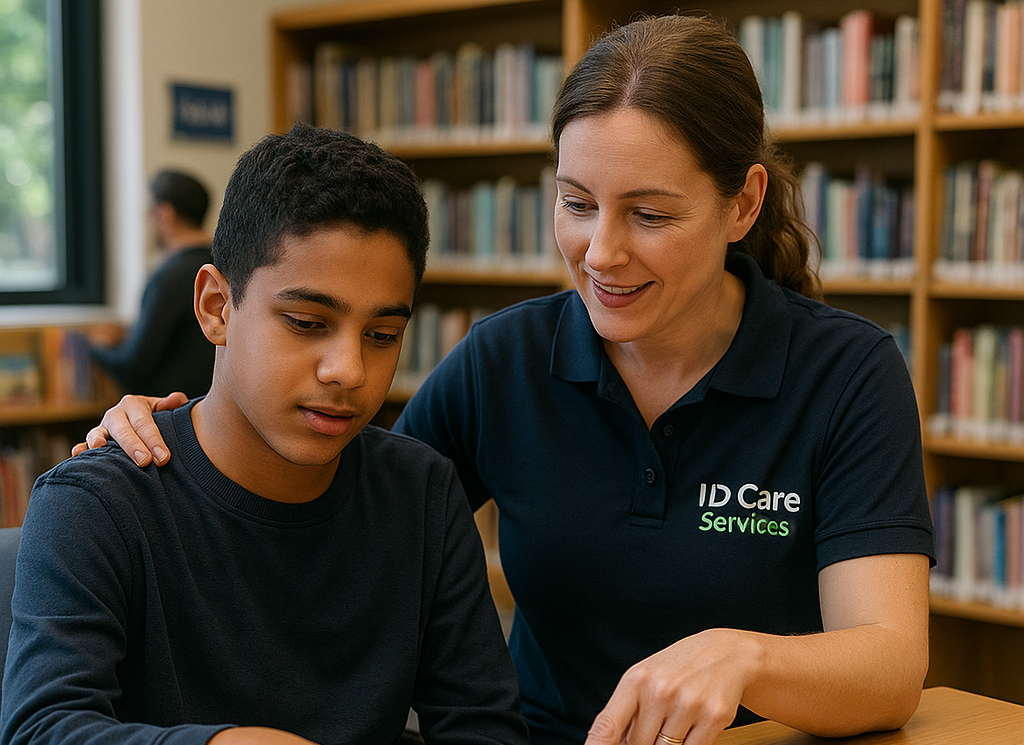
Measuring progress
- Baseline & reviews every 8–12 weeks (or as commissioned).
- Data we keep: session logs, goal trackers, ABC/PBS notes (if relevant), photos/work samples (with consent), and attendance.
- Outcome reporting shared with families and referrers; plans adjusted quickly if progress stalls.
Safety, dignity, and quality
- Trained, DBS-checked staff; safeguarding children & adults; infection prevention & control; moving & handling competency.
- Risk assessments for individuals, environments, and activities; dynamic risk reviews during outings.
- Respectful language, privacy, and cultural/religious preferences always upheld.
Working with families & professionals
- Short handover after each session and weekly snapshots on goals.
- Joint visits with schools/colleges and therapists (where agreed) so strategies stay aligned.
- Easy-read guides for home practice and visual supports families can keep.
Preparing for adulthood (14+)
- Choice-making, rights & responsibilities, digital citizenship, travel training, budgeting, meal planning, and community safety.
- Pathways to education, volunteering, or supported work with realistic milestones.
Let's
Work
Together
Empower your child with the tools to excel. Learn more about our educational and developmental support.
Copyright © 2025. All Rights Reserved By ID Care Services